Did you know that as early as the 17th century, there were laws on the books forbidding the disruption of a religious service in our land? Some news sources claim that disturbing a church service falls under First Amendment rights. However, laws against disrupting religious services date back to the 17th century in America. Historian William J. Federer traces the history of protecting worship from disruption.(Link to the full article appears below). Here are a few examples worth your time. You may have to work through old English, but you’ll get the gist of the meaning:
17th-Century Laws on Disturbing Religious Services
Massachusetts Bay Colony Cambridge Platform, 1648:
“7. … venting corrupt and pernicious opinions … open contempt of the word preached, prophanation of the Lord’s day, disturbing the peaceable administration and exercise of the worship and holy things of God, and the like, are to be restrained and punished by civil authority.”
Charter of Carolina, March 1, 1669:
“Article 102. No person of any other church or profession shall disturb or molest [to trouble, to disturb; to render uneasy] any religious assembly.”
Maryland Toleration Act, 1649:
“Every person … willfully to … disturb … or molest any person … professing to believe in Jesus Christ … in respect of his or her religion or the free exercise thereof … that such person … so offending, shall be compelled to pay trebble damages to the party so wronged.”
Evolution of Worship Protection Laws in the 18th Century
Massachusetts Constitution, 1780, 1788:
“Article 2 … No subject shall be hurt, molested, or restrained … for worshipping God in the manner … most agreeable to the dictates of his own conscience … provided he doth not disturb the public peace, or obstruct others in their religious worship.”
South Carolina Constitution, 1778, 1788:
“No person shall disturb or molest any religious Assembly; nor shall use any reproachful, reviling, or abusive language against any church, that being the certain way of disturbing the peace … by engaging them in quarrels and animosities.”
Modern Adoption of Historical Religious Freedom Laws
New Hampshire Constitution, 1784, 1788, 1792, 1968:
“Article 5 … Every individual has a natural and unalienable right to worship God according to the dictates of his own conscience … provided he doth not … disturb others in their religious worship.”
Maine Constitution, 1819, 1993:
“Article 1, Section 3. All individuals have a natural and unalienable right to worship Almighty God according to the dictates of their own consciences … provided that that person does not … obstruct others in their religious worship.
Maine State Statutes, 1911:
“LORD’S DAY … penalties for ‘whoever on the Lord’s Day or at any other time, behaves rudely or indecently within the walls of any house of public worship; willfully interrupts or disturbs any Assembly for public worship.’”
Future Founder and President James Madison introduced a Bill in the Virginia Legislature, October 31, 1785, for Punishing Disturbers of Religious Worship, which passed in 1789:
“If any person shall of purpose, maliciously, or contemptuously, disquiet or disturb any congregation assembled in any church …
he may be put under restraint during religious worship, by any Justice present … and … shall commit him to prison, there to remain till the next court to be held … and upon conviction … shall be further punished by imprisonment.”
Concluding Reflection
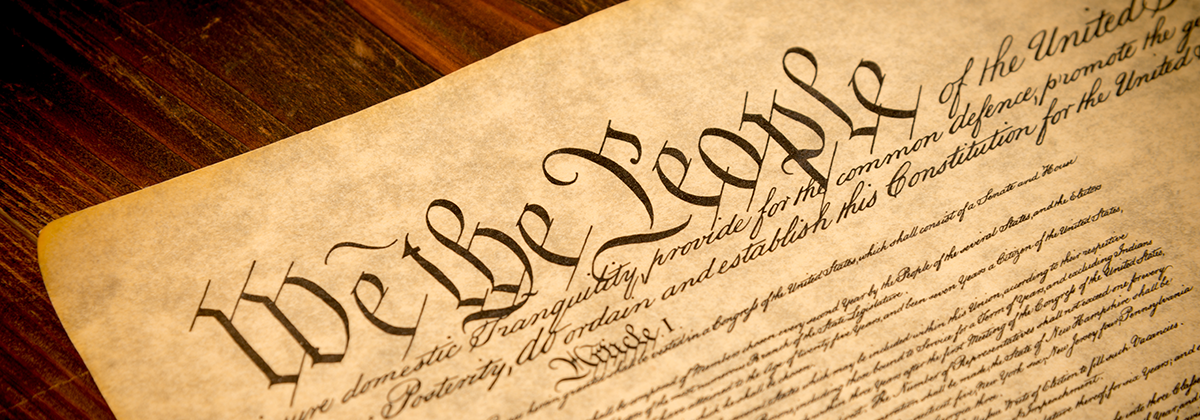
I find it interesting that a new, modern interpretation of freedom to worship is being publicly proclaimed and accepted by those in powerful positions who offer a clumsy, inept interpretation of our law and our history. Americans, it is up to We the People to know the truth. Americans should know this legal and historical record—because politicians, the press, and professors won’t always tell the complete truth.
This is Common Sense Civics and Citizenship 🇺🇸
Bill Federer’s article link: https://shorturl.at/3Ov5d
Join the conversation! https://www.facebook.com/commonsensecivics