The First Amendment protects five freedoms: Freedom of Religion, Freedom of Speech, Freedom of the Press, Freedom to Assemble Peaceably, and Freedom to Petition the Government for a Redress of Grievances.
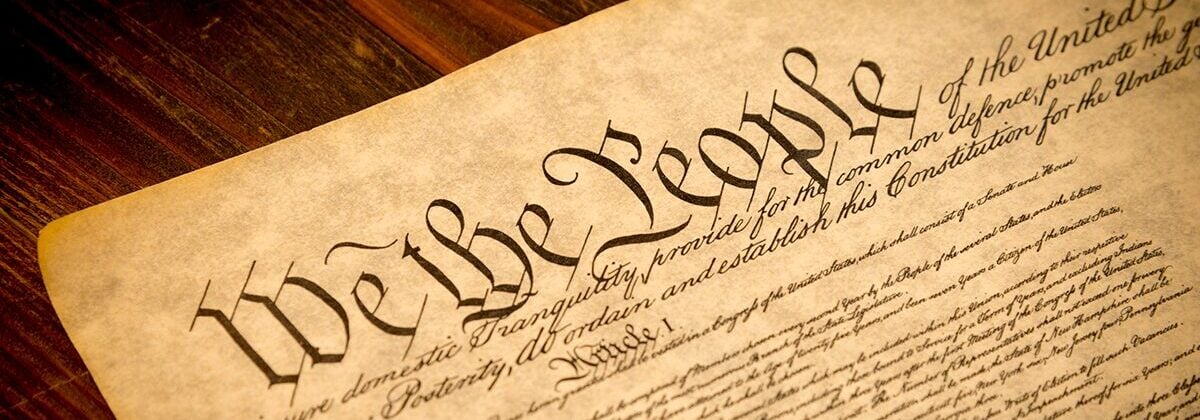
Here is the First Amendment as it appears in the U.S. Constitution Bill of Rights, ratified in 1791:
“Congress shall make no law respecting an establishment of religion, or prohibiting the free exercise thereof; or abridging the freedom of speech, or of the press; or the right of the people peaceably to assemble, and to petition the Government for a redress of grievances.”
First Amendment Rights: Religion, Speech, Press, Assembly, Petition
Freedom of Religion: “Congress shall make no law respecting an establishment of religion…” Congress cannot establish a national church or religion according to the Constitution. Nor can Congress make laws that prohibit you from freely exercising your faith- or not practicing faith at all.
Freedom of Speech: Speech is generally protected, including speech we don’t consent to or don’t like. However, speech that is a clear and present danger to our national security and safety, or incites crime or violence, is not protected under the First Amendment.
Freedom of the Press: Freedom of speech extends to the media.
Freedom to Assemble Peaceably: Peaceful protests and gatherings are protected under the First Amendment. Property damage, murder, theft, and destruction of others’ property are not permitted.
Freedom to Petition the Government for a Redress of Grievances: It is lawful to present our government authorities with our complaints, desires, requests, and demands to fix injustices, without fear of government punishment. This does not guarantee a certain result, only the right to seek a remedy.
“Congress shall make no law…”: Notice that the First Amendment limits government, not private employers or platforms. Read “Why the First Amendment Isn’t Unlimited.”
Questions and Answers:
What are the five freedoms in the First Amendment?
The First Amendment protects these five freedoms: religion, speech, press, assembly, and petition.
Does the First Amendment apply to schools?
Yes. You have the right to speak and live according to your faith in school. Students can practice their rights and use them effectively as adults.
Does the First Amendment protect me at work?
It depends. If you work in the private sector, you cannot claim First Amendment protections when expressing opinions or engaging in discussions at work. Employers can discipline or fire you for your speech. Other legal protections may apply, for example, under state laws.
If you work in the public sector, there are limited speech protections on certain public concerns, but speech related to your job is not protected.
Why is the First Amendment important?
Without the First Amendment, you would not be able to worship freely without having to pay taxes to a United States church. Also, you would have to guard your opinions to avoid punishment from the government. Journalists would be allowed to write and speak only the government’s prescribed message; public assembly or protests would be either heavily monitored or forbidden. You would have no avenue to complain or seek a remedy for injustices.
You may disagree with my explanation of these rights, but at a minimum, you can now name the five freedoms guaranteed in the First Amendment of the Bill of Rights. Consider Thomas Jefferson’s words: “If a nation expects to be ignorant and free, in a state of civilization, it expects what never was and never will be.”
This is Common Sense Civics and Citizenship. 🇺🇸
Join the conversation! https://www.facebook.com/commonsensecivics
Additional reading: